Research Revisited
Earlier studies.
Fresh context.
Some of the most-cited ideas about circulation come from studies done decades ago. We go back to the original papers and read them alongside what’s been learned since: what held up, what was refined, and what changed.
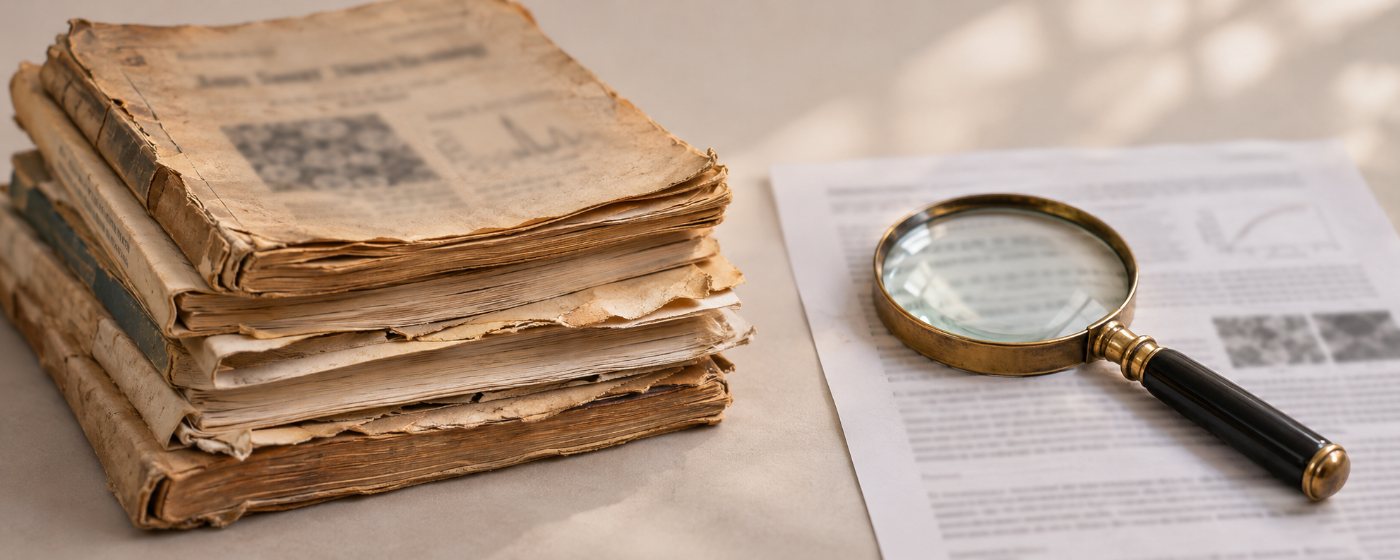
How a revisit works
Step 1
Read the original
We start with the paper itself, not the way it was later quoted — its methods, its participants, and the claims its authors actually made.
Step 2
Place it in its time
What tools and knowledge were available then? Methods that were state of the art in one decade can look limited in the next.
Step 3
Compare with today
We look at later research, including reviews where available, and explain plainly where the evidence now agrees, disagrees, or is still unsettled.
From the archives
Browse all topicsDiscovery
How we learned blood circulates
The 17th-century work that described the heart pumping blood in a continuous loop — and why careful observation and measurement mattered so much.
Read itSignaling
The “relaxing factor” in blood vessels
How research in the 1980s identified nitric oxide as a signal that helps vessels widen, and how that work shaped decades of circulation research.
Read itPopulation studies
What long-running cohort studies taught us
Large studies that followed communities for decades helped popularize the idea of “risk factors.” What they showed — and the limits of observational data.
Read itActivity
The bus study that started exercise science
Mid-century comparisons of people with active and seated jobs, read with today’s understanding of confounding and study design.
Read it